
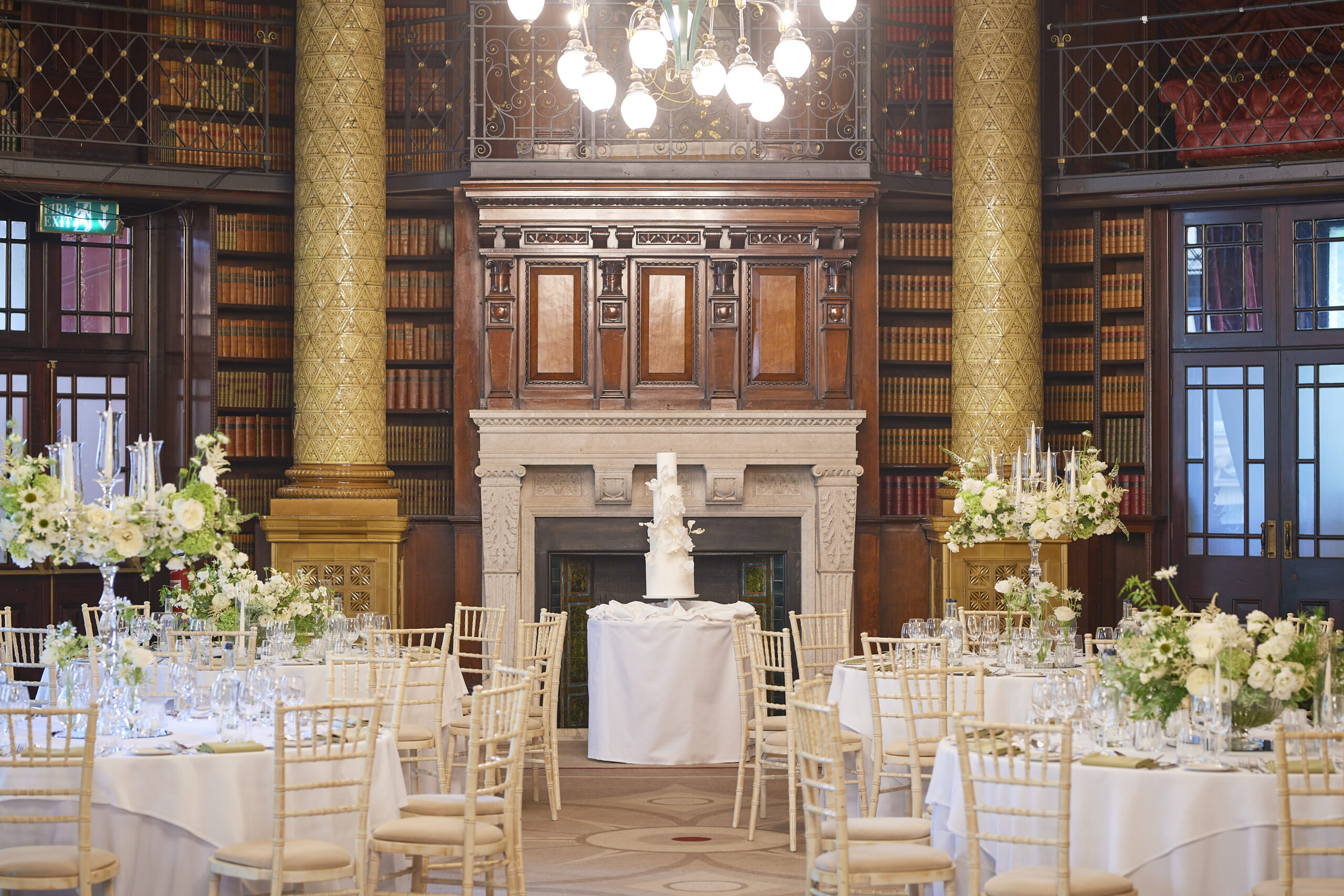
A historic wedding venue can offer something no amount of styling can reproduce: rooms that have already witnessed centuries of London life. It also brings responsibilities. At a royal palace, a gallery full of art or a protected historic building, what couples can do with flowers, music and even the timetable may be different from a hotel.
These seven venues each have an extraordinary past. The more interesting question is what it would actually be like to get married in them today.
Kensington Palace, Kensington Gardens
For: A royal ceremony and formal dinner | King’s Drawing Room ceremony: up to 100 guests
Guests enter Kensington Palace through the gardens and move up the King’s Staircase to the State Apartments. The King’s Drawing Room, Cupola Room and King’s Gallery can each be used for a different part of the celebration. The spaces already have so much character that the history is the backdrop.
The main decision is whether the day ends with dinner or continues into a party. Amplified music and dancing are not allowed inside the historic palace rooms; the separate Orangery is the space to consider for evening entertainment. It can also be booked without the State Apartments.
The Ned, City of London
For: Historic interiors without palace restrictions | Full seated wedding: around 140 guests
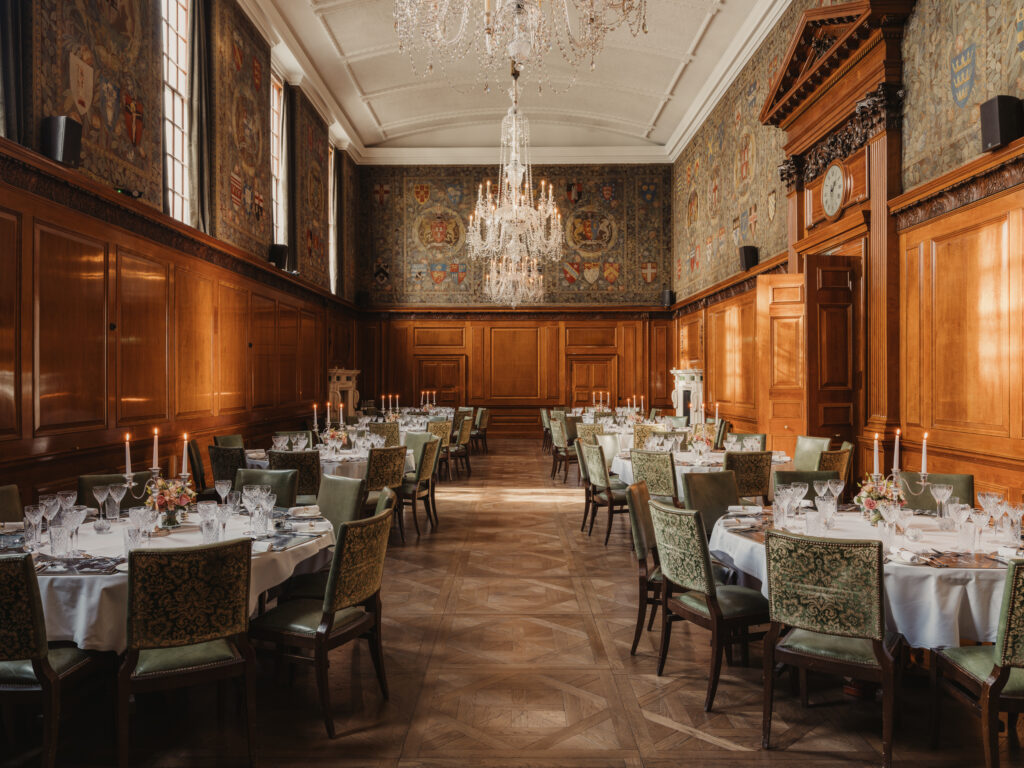
The Ned was built as the headquarters of Midland Bank. Its sixth-floor rooms were once used by the bank’s senior figures, and the Tapestry Room still carries the coats of arms of places where Midland Bank had branches. This is history you can see at close range rather than behind barriers.
It also functions as a busy modern hotel. The reception, dinner and dancing can move between connected rooms on the sixth floor, which makes a different kind of historic wedding possible from the conservation-led palaces.
Hampton Court Palace, East Molesey
For: A wedding spread across royal rooms | Great Hall seated dinner: up to 220 guests
Hampton Court gives couples an unusually broad choice. A drinks reception in the Orangery overlooking the Privy Garden feels very different from dinner beneath the timber roof of Henry VIII’s Great Hall. The Undercroft below can provide an evening party setting.
There are also separate choices within the grounds: the Garden Room for a wedding with its own walled garden, and the Little Banqueting House beside the river for about 50 guests. Not all rooms have the same rules, particularly for younger guests and music, so it is worth planning the day space by space rather than asking about ‘the palace’ as though it were one venue.
Banqueting House, Whitehall
For: Dinner beneath a painted masterpiece | Main Hall dinner and dance: up to 300 guests
Banqueting House belonged to the vast former Palace of Whitehall. Most of that palace has gone, but the Main Hall remains, topped by the ceiling paintings commissioned from Rubens. It is hard to imagine treating the room as an ordinary blank canvas, and there is little need to do so.
The vaulted Undercroft offers a different atmosphere downstairs. Both can be used for wedding events, although this is dry-hire heritage space: approved suppliers, conservation rules and arrangements for furniture and catering need attention well before the wedding.
One Whitehall Place, Westminster
For: A celebration surrounded by Westminster history | Gladstone Library seated dinner: around 250 guests
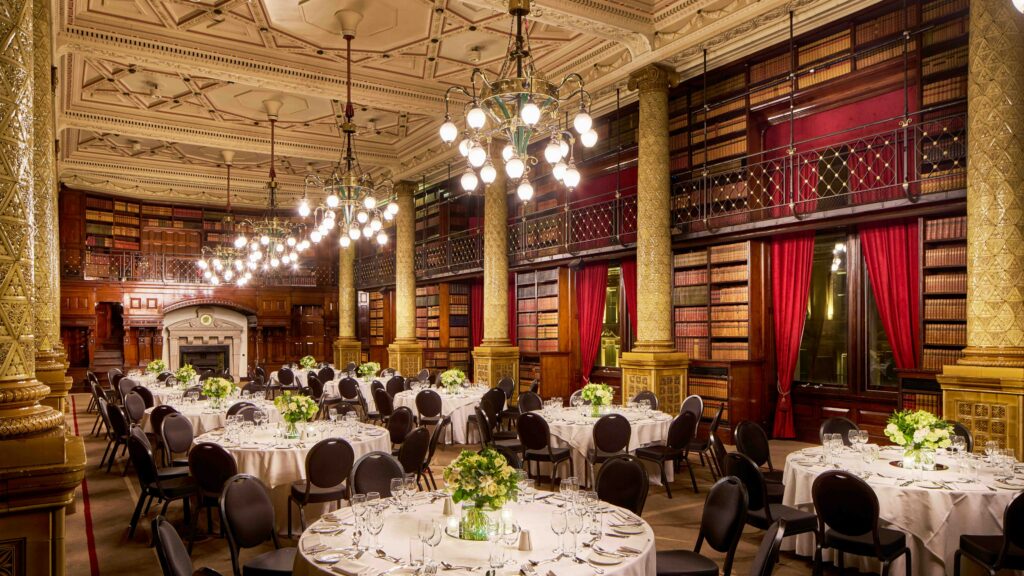
One Whitehall Place is connected to the Royal Horseguards Hotel, but its event spaces have an identity of their own. The Gladstone Library and adjoining Reading and Writing Room bring scale and architectural detail, while the marble staircase gives guests a memorable route through the building.
When we visited, the team explained that the entrance and staircase are also used in connection with the neighbouring club. Couples looking for total privacy should establish exactly which spaces their hire makes exclusive.
Tower of London, Tower Hill
For: A small ceremony or historic dinner | White Tower dinner: up to 90 on rounds; Medieval Palace: up to 40
The Tower is the perfect choice for couples who want the experience of the building to shape the event. In the Medieval Palace, the evening can include the Ceremony of the Keys. A White Tower booking may involve an arrival through its historic entrance and a private viewing of the Crown Jewels; the New Armouries offers a larger, more adaptable space.
There are restrictions here that should never be buried in the small print: no dancing in the wedding spaces, tight evening departure times and no wheelchair access to the White Tower or Medieval Palace. The New Armouries is the more accessible alternative. However, the events team work hard to try and accommodate each individual events needs.
Raffles London at The OWO, Whitehall
For: Military history alongside a contemporary wedding production | Whitehall Ballroom dinner and dance: around 400
The Old War Office was a working centre of government before being converted into Raffles. Its grand staircase and restored public rooms tell that story, while the main ballroom beneath the hotel has been designed for modern events.
That pairing is the appeal. Couples can use the historic setting for arrival and photographs while arranging a more elaborate celebration in an event space with the technical facilities to support it. Unlike a small palace room, the Ballroom is designed to accommodate substantial staging and lighting.
Before booking a historic venue
Ask what is protected, where you can have amplified music and how much time suppliers have to set the rooms. A wedding may be allowed in a historic space without a late-night party being possible there. Some heritage venues also distinguish between exclusive access to the hired rooms and exclusive use of the wider site.
For comparisons across every type of venue, see our London wedding locations guide, or our London hotel wedding venues article if you prefer to stay on site. If you would rather marry elsewhere and celebrate in a historic setting, our guide to wedding reception venues in London covers eight options.
All capacities refer to named spaces and arrangements; confirm licences and restrictions with each venue.