
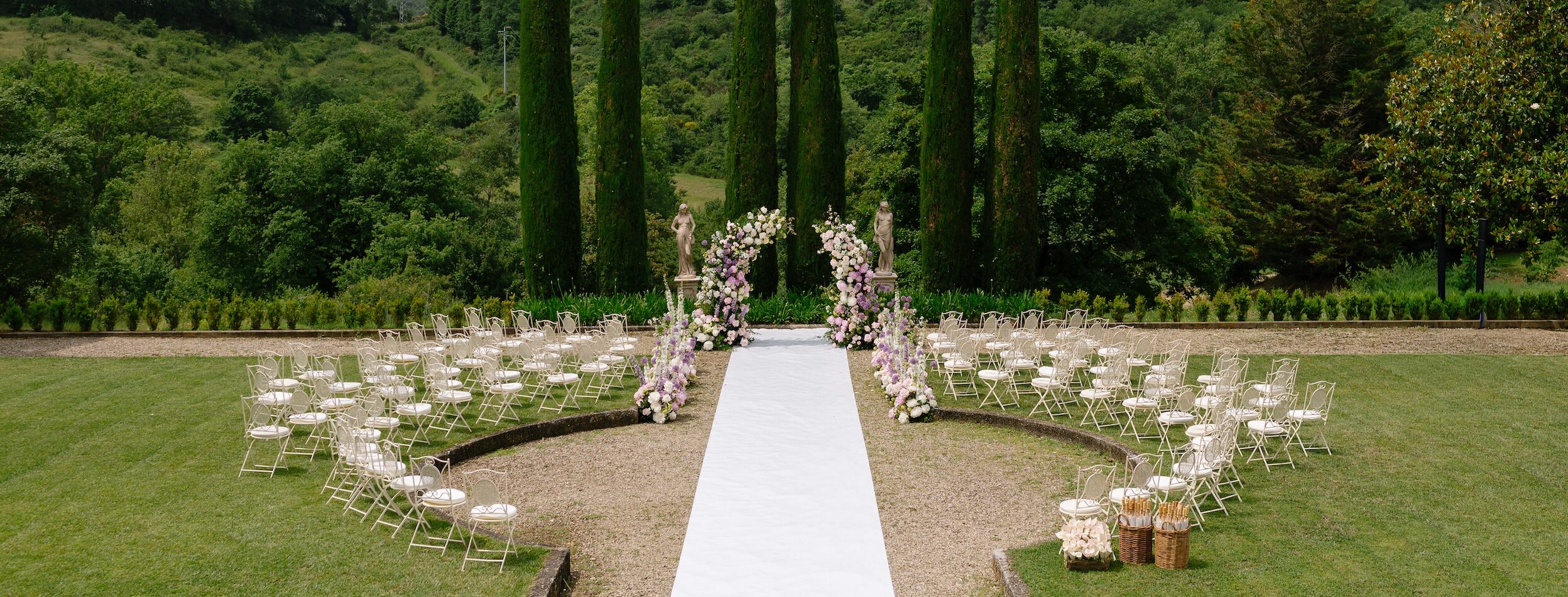
Destination wedding planner Charlotte Ricard-Quesada has spent ten years planning celebrations across France, Italy, Spain and wider Europe. Here is how she helps couples narrow down a whole continent to one venue.
Almost every couple planning a wedding abroad starts in the same place. They know they want somewhere warm, somewhere beautiful, somewhere their guests will remember. What they often cannot answer is the obvious follow-up: where, exactly?
We put that question to Charlotte Ricard-Quesada, founder of La Fête, in the latest episode of The Destination Brief. Her answer surprised us, because it does not begin with venues at all.
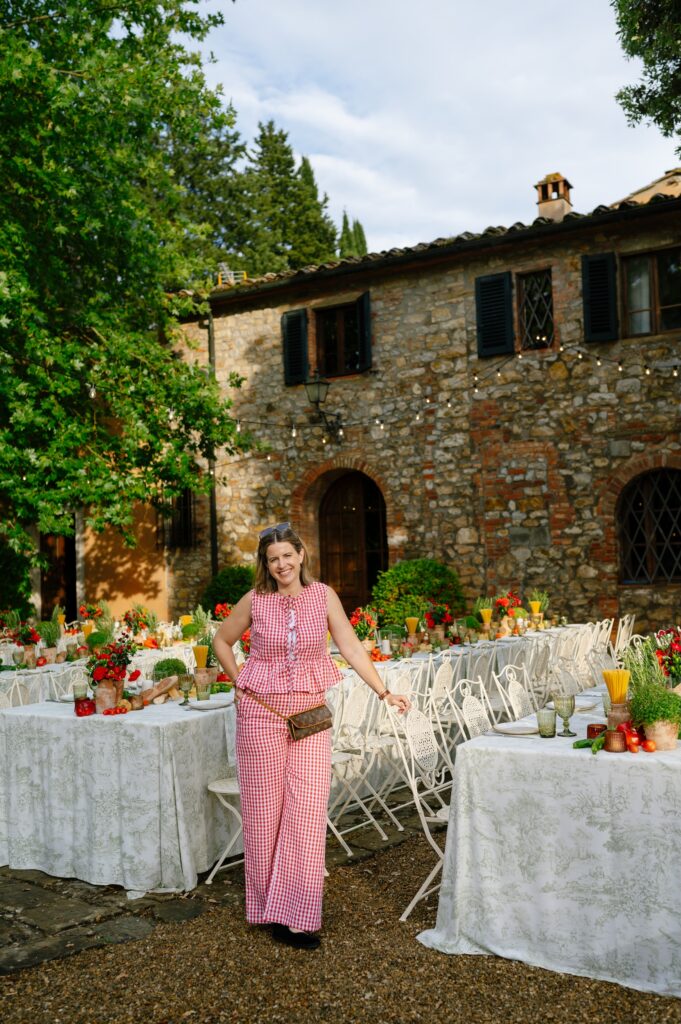
“We want the Mediterranean” is not a plan
This is the request Charlotte hears most often, particularly from couples in the US and Canada.
For most people, the Mediterranean means France, Italy or Spain. That is three countries, dozens of regions and thousands of venues, so the work is in narrowing it down before anyone starts looking at photographs. Charlotte does that with questions rather than suggestions.
Her first one is the simplest, and the answers are not always what you would expect. Have you actually been to these countries? Some couples have spent months building mood boards for a country they have never set foot in.
Choose the food before you choose the country
Charlotte’s second question is the one we keep thinking about.
“Which cuisine do you prefer? Because let’s be honest, we’re not going to go to France to then ask them to cook Italian food.”
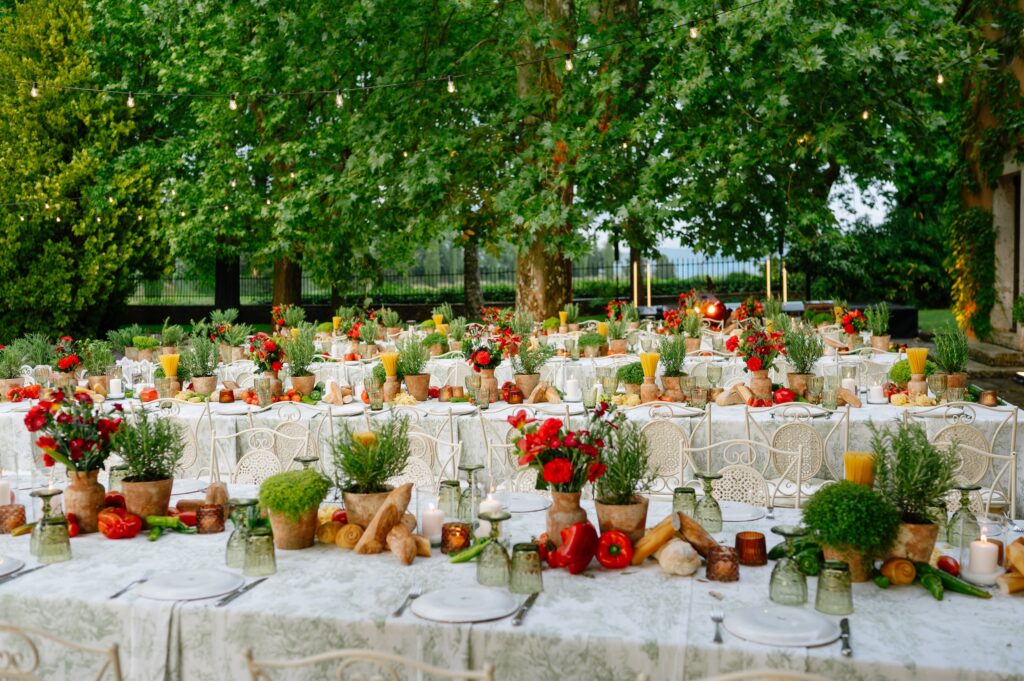
It sounds almost too simple. In reality it is one of the fastest ways to cut the list in half. Your guests will eat two or three meals with you across the weekend, and the food is one of the things they will talk about afterwards. If you already know you want long lunches of pasta and local wine, Italy answers the question for you, and you can start with our wedding venues in Italy.
The same logic applies to the look you want. A château sounds specific until you try to book one, because there is medieval, there is rococo and baroque, and there is art nouveau, and they sit in different parts of Europe. Naming the style you actually want saves months, and it is worth browsing wedding venues in France with a particular period in mind rather than a general idea of a castle.
Your guest list decides more than you think
Here is where romance meets arithmetic. There is a significant difference between planning for 60 to 80 guests and planning for 300, and it changes which venues are even available to you.
Charlotte works with a growing number of couples planning large multicultural celebrations, and finding European venues that can seat 300 or more is one of the harder parts of her job.
“They’re like gold dust. There are some, but you need to find them, you need to know about them.”
If your guest list is large, decide that number early. It will shape your shortlist far more than the colour palette will.
Where does your budget go furthest?
Two cities can sit in the same country and cost dramatically different amounts for the same wedding.
“Barcelona and Seville, great offerings, quite different. But prices are drastically different. I’d say it’s at least 30 to 40% more expensive in Barcelona, for the same.”
Her verdict is that southern Spain currently gives couples the best quality for the money in Europe.
Barcelona brings the energy of a major city, beautiful properties on the outskirts and a coastline. Seville is smaller and, in her view, one of the most beautiful cities in Spain. Neither is the right answer. They are simply different weddings at different price points, and comparing them side by side across our wedding venues in Spain is the quickest way to see the gap for yourself.
Check the airport before you fall in love with the venue
Portugal comes up constantly in destination wedding searches, and Charlotte rates it. Her hesitation is logistical rather than aesthetic: some of the loveliest properties are a long way from an airport, and every extra hour of transfer time is an hour your guests spend in a minibus rather than with you.
Seville is her counter-example, because the airport sits around twenty minutes from the city centre.

Think about the shape of the whole trip, too. Most guests will extend a destination wedding into a holiday, so being close enough to a city for people to spend a couple of days exploring, while still being able to reach somewhere rural, tends to give everyone the better weekend.
The paperwork nobody warns you about
Marrying abroad involves more administration than marrying at home, and the requirements differ by country.
Charlotte gave one example from a wedding she is planning in Italy, where couples now have to pay for a licence of around €300. It confirms the date, the venue and that noise will stay within permitted levels, and a notice goes up at the local town hall. The venue will not complete the paperwork on your behalf.
“If we don’t do it, well, technically it’s illegal to have any music on.”
This is one of the strongest arguments for working with someone who knows the country. Many couples find it simpler to complete the legal ceremony at home and hold a symbolic ceremony at the venue abroad, which avoids navigating a foreign legal system entirely. Your wedding planner will advise on the right route for your circumstances.
Local knowledge is not a luxury
Charlotte speaks four languages and knows the cultures she works in, which means she also knows where the limits sit. Her story about a French caterer and an American couple who asked one question too many is worth hearing in full, and it makes a serious point underneath the comedy: service works differently in different countries, and expecting one country to behave like another causes problems no budget can solve.
Where she does not have that depth, she partners with someone local. Greece is on her list of places she would love to work, and she would bring in a Greek planner if she did. If the islands are on your own list, our wedding venues in Greece are a starting point, though the same advice applies: find someone who knows the country properly.
Watch the full conversation
Charlotte also talks about burnout in the wedding industry, the hailstorm that nearly derailed a wedding in Florence, and the trends she thinks are worth paying attention to next year.
Prefer to listen? The episode is also on Spotify.
Once you have a country in mind, our full collection of luxury destination wedding venues in Europe is the place to start building a shortlist.