
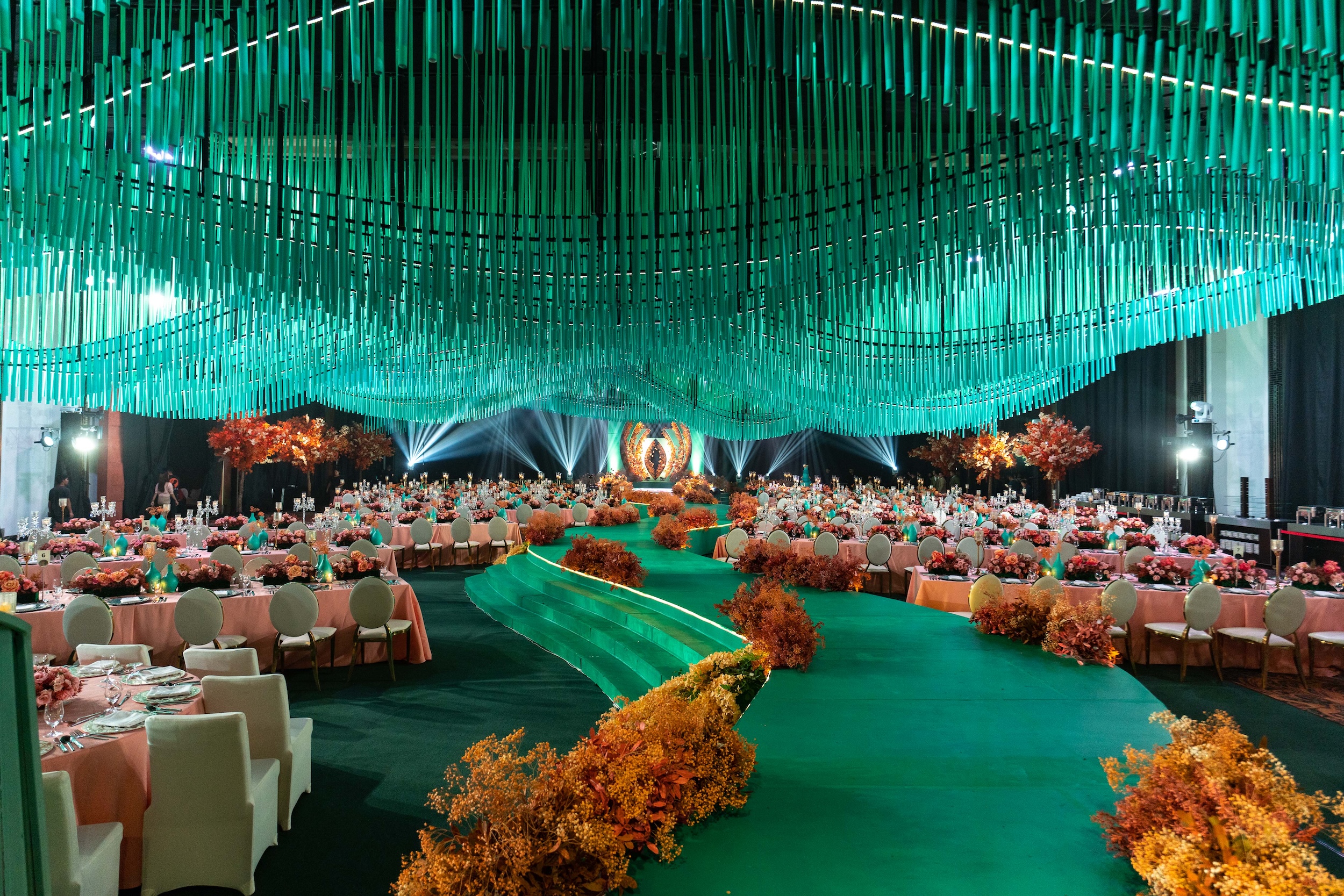
From AI-assisted visualisations to overnight installations involving dozens of people, internationally renowned floral and event designer Gideon Hermosa reveals what it really takes to turn an ambitious wedding design into reality.
The world’s most spectacular wedding photos keep raising the same question lately: is it real, or is it AI?
For floral and event designer Gideon Hermosa, that question has become oddly literal. Some of his installations are so ambitious that people assume the photos must be generated, not photographed.
We sat down with Gideon on Beyond Weddings: The Destination Brief to find out what actually happens behind the finished images, from the first conversation with a couple to the overnight build, and where AI genuinely fits into a process that still lives or dies on execution.
What does a wedding designer actually do?
A wedding designer shapes the creative look and feel of a wedding. That’s a different job to planning it.
Gideon calls himself a floral and event designer rather than a planner. A planner might handle suppliers, timings and the running order of the day. Gideon’s job is the design itself, and at the top end of the industry that means far more than flowers and a colour palette. It can mean flooring, ceilings, walls, custom structures and furniture, all reworked to change how a space feels.
He’s been doing this professionally for almost 16 years and he even did his first wedding florals at 16 years old.
How does the design process actually start?
With the couple, not just the mood board.
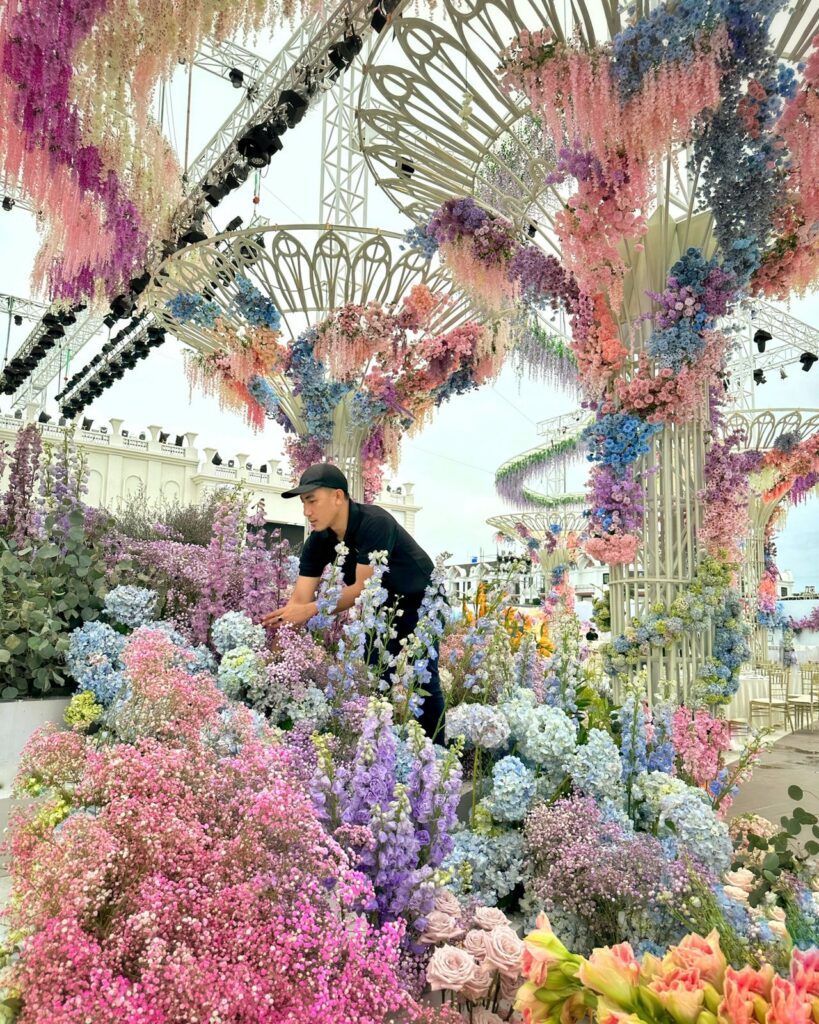
Before Gideon develops a concept, he sits down with the couple and asks about their lives well beyond the wedding itself: their background, their personalities, the small details that might not seem relevant at first. The goal is to find something he can build the design around, so the day feels like theirs rather than a repeat of someone else’s.
He doesn’t need a curated Pinterest board to work with either. Sometimes it’s a handful of holiday photos, a shop window that caught someone’s eye, or an image that has nothing to do with weddings at all. Put together, those references often say more about a couple’s taste than a straight answer to “what’s your wedding style?” ever could.
Should you show your designer Pinterest and Instagram inspiration?
Yes. Just don’t expect a copy.
It’s completely normal now to arrive at a first meeting with screenshots of installations, details or colour schemes that caught your eye. For a designer, that’s useful. It tells them what you’re drawn to.
What Gideon won’t do is recreate someone else’s wedding. His team treats reference images as a starting point, then builds their own interpretation around the couple, the venue and the wider concept.
So instead of asking for an exact replica, it helps to work out what you actually like about the image. Is it the scale? The colour? The shape of the installation, or the density of the flowers? The lighting? Knowing that gives your designer room to make something that’s actually yours.
Are wedding designers using AI?
Increasingly, yes, though not in the way people assume.
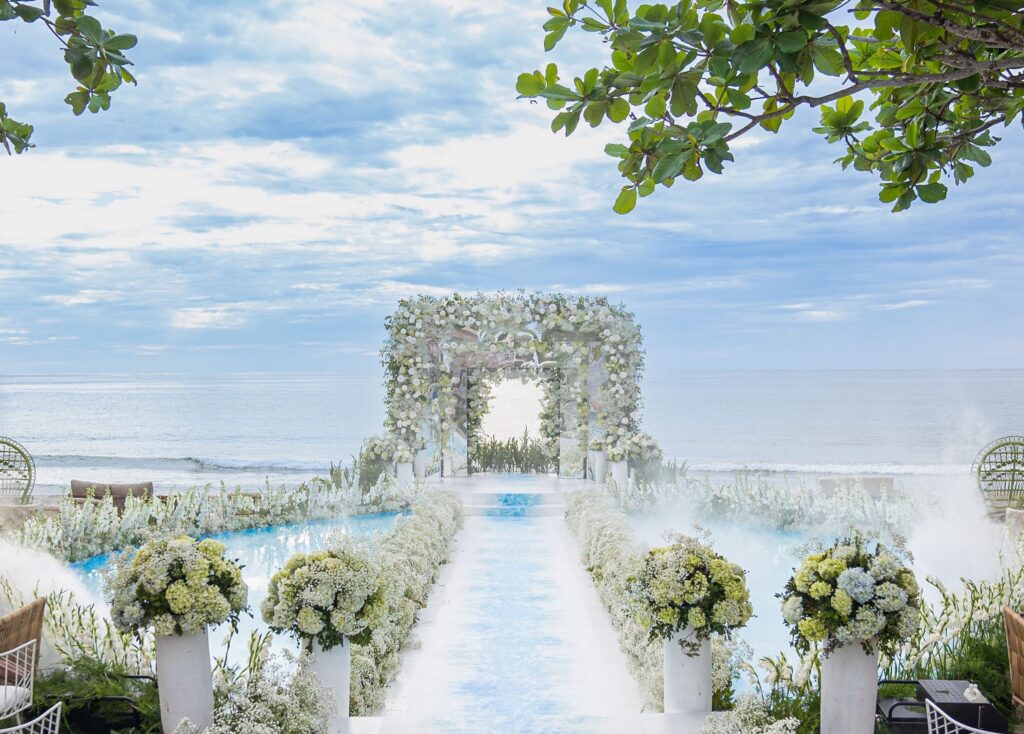
For Gideon, the ideas still come from him and his team. AI is a tool for showing a couple what a concept might look like before anything gets built, not a tool for generating the concept itself.
He was wary of it at first. His instinct was that it might dull his creativity rather than support it. Instead of treating it as competition, he’s folded it into his existing process as a way to visualise ideas faster.
That matters for couples too. It’s one thing for a designer to describe a completely transformed space in words or sketches. It’s another to actually see it before a single flower has been ordered.
Can an AI visualisation actually be built?
Creating the image is the easy part. Turning it into reality is the job.
Before Gideon’s team shows a couple an AI-assisted visualisation, they’ve already worked out whether they can build it. If the couple says yes, that plan needs to hold up in the real world.
That’s where the AI tool runs out of usefulness. An AI-generated image doesn’t automatically account for access routes, structural limits, weather, materials, available labour or budget. If an image looks beautiful but won’t work well in the actual venue, Gideon says the only option is honesty: tell the couple it won’t work, and find something that will.
A striking image is one thing. Knowing what can genuinely be built is a different skill entirely, and it’s the one that actually matters on the day.
Can AI replace a wedding designer?
Not really, and the reason comes down to what the job actually involves.
There’s a common assumption that event design is just arranging beautiful things in a room. Gideon pushes back on that. Coming up with an impressive and unique concept is half of the work. The other part is making something that can survive production: the materials, the logistics, the venue’s quirks, and still land emotionally for the couple getting married in it.
AI can speed up the visualising. It can’t replace the judgment that turns a picture into a physical space forty-five people can build overnight.
How should couples actually use AI for inspiration?
Treat it as a sketchpad, not a spec sheet.
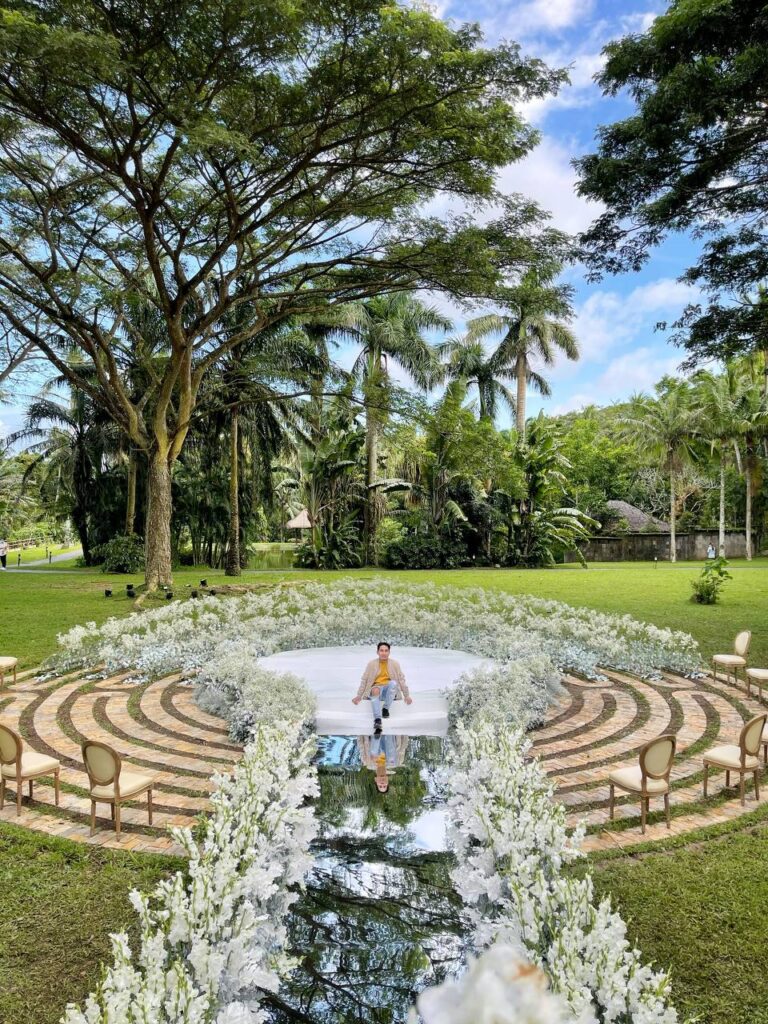
AI tools are genuinely useful for playing with colour, shape or table styling, especially if you know how you want the day to feel but can’t quite put it into words. The mistake is treating the output as a fixed brief.
Bring those ideas to a planner or designer and let them interpret what’s actually working in the image. They’ll be the ones who can tell you what would work well with your venue, your destination and your budget. The same logic applies to Pinterest boards and Instagram inspiration. Use them to show your taste, not to demand an exact rebuild.
What does building a large-scale installation actually involve?
Nothing in the finished photo tells you what happened the night before.
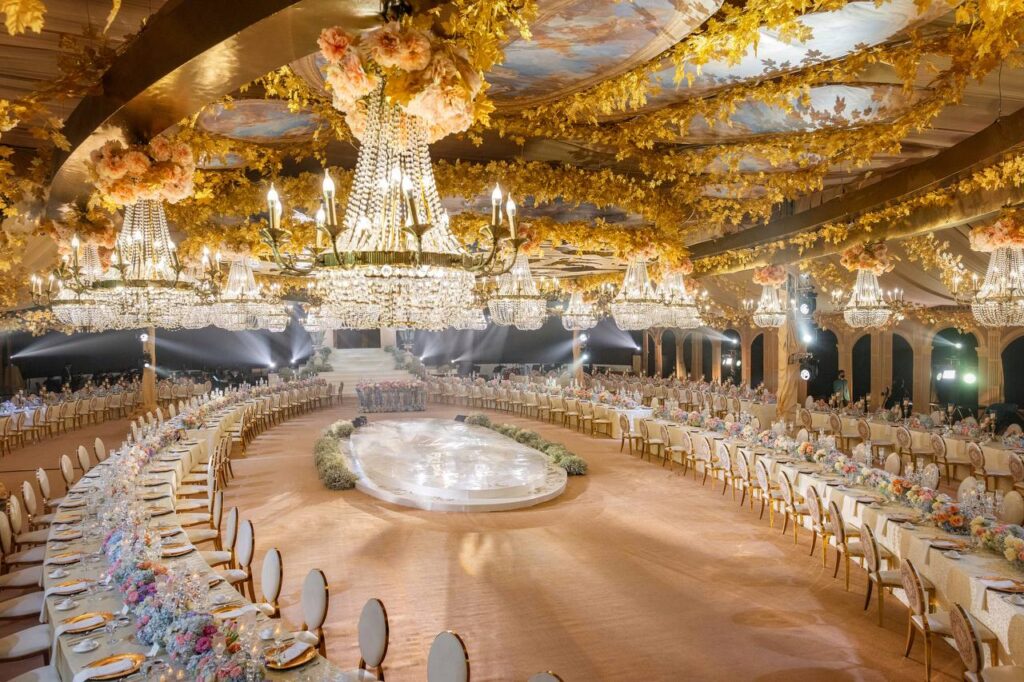
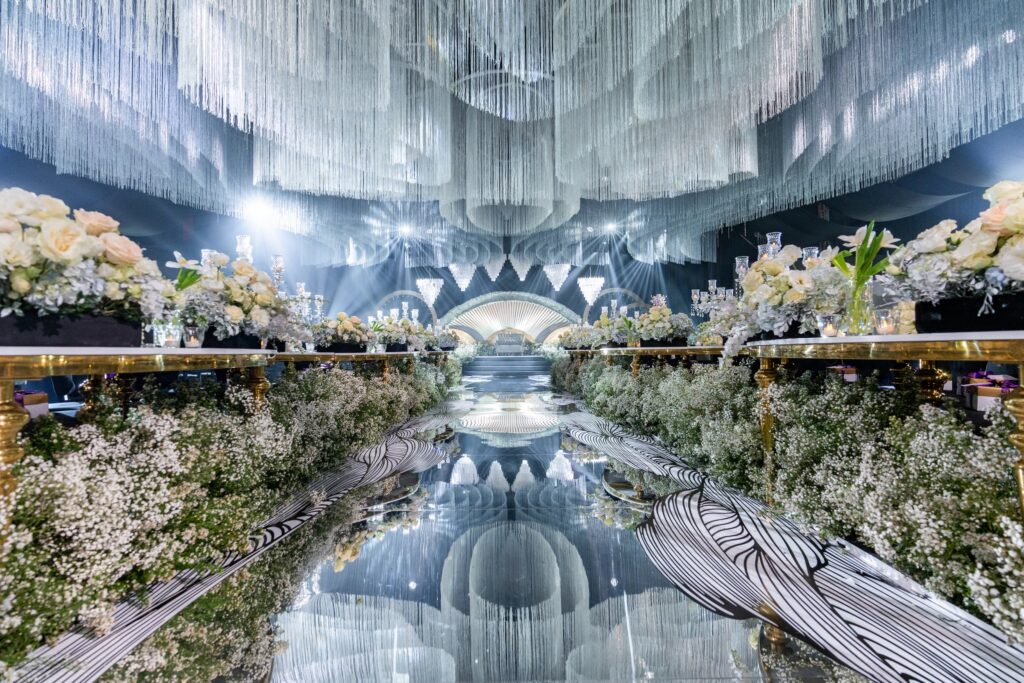
For his bigger designs, Gideon’s team starts setup at around 1am on the wedding day itself. Depending on the scale of the project, that can mean 45 to 60 people working through the night on ceilings, walls, flooring and florals, all so the room is ready before the first guest walks in.
It’s a useful reminder for anyone scrolling through wedding photos online. What looks like one effortless shot is usually the result of months of planning followed by an intensive overnight build.
For Gideon, the payoff is watching the couple see the space for the first time. He says the stress of the build tends to disappear the moment they walk in.
How is a destination wedding different?
The location becomes part of the brief, not just the backdrop.
Gideon is drawn to outdoor settings, especially anywhere water and mountains meet. Unusual environments appeal to him precisely because they’re harder.
One recent project took him to the Swiss Alps, ticking off a destination he’d wanted to work in for years. Everything the team needed to build the installation had to go up the mountain by helicopter. The altitude shaped the design itself too. Temperature and weather conditions affected which flowers could actually be used, and Gideon has learned over years of working across different climates which blooms hold up in the cold and which simply won’t survive the trip.
It’s a good example of how much practical knowledge sits behind what looks, from the outside, like a purely creative choice.
How much does luxury wedding design cost?
There’s no single number, as the venue and destination can fundamentally change what’s required.
Location, scale and the level of production involved can shift the cost dramatically, and the same budget can produce very different results depending on where in the world you’re building. Gideon’s approach is to work within whatever budget a couple brings, show them what’s realistic, and where it’s useful, show them what extra investment would actually buy them. That way the couple decides where their money goes rather than being handed a number with no context.
It’s another reason to bring a designer in early, before an entire concept has been built around a budget nobody’s checked.
Can luxury wedding design be sustainable?
It’s a genuine tension, and Gideon doesn’t pretend otherwise.
Large-scale event design produces waste, and there’s no getting around that entirely. What his team does instead is look for smaller decisions that add up: skipping floral foam where it isn’t necessary, recycling packaging from flower deliveries, thinking through what happens to individual elements once the wedding is over. None of it solves the problem outright, but it chips away at it.
If sustainability matters to you, it’s worth raising with your planner and designer at the very start of the process, not once the concept is already locked in.
What should you look for in a luxury wedding designer?
A beautiful portfolio only tells you half the story.
Before you hire someone, it’s worth finding out whether they take the time to actually understand you, rather than handing you their signature look regardless of who you are. Consider whether they can take your reference images and build something of their own from them, and whether they understand your venue and destination well enough to know what’s realistic there. You should also feel confident they’ll tell you honestly if something won’t work and be upfront about how your budget shapes the design.
Above all, look for someone who can do both halves of the job: imagine something extraordinary, and actually build it.
The tools available to designers and couples will keep changing. Generating a stunning image is only going to get easier. Turning that image into a wedding still comes down to experience, and that part isn’t going anywhere.
Watch the full interview with Gideon Hermosa
In the full episode of Beyond Weddings: The Destination Brief, Gideon talks through his path into floral and event design, the role AI now plays in his process, designing at altitude in the Swiss Alps, and what a 1am build with sixty people actually looks like.
Explore more expert advice, destinations, venues and wedding professionals with Beyond Weddings.